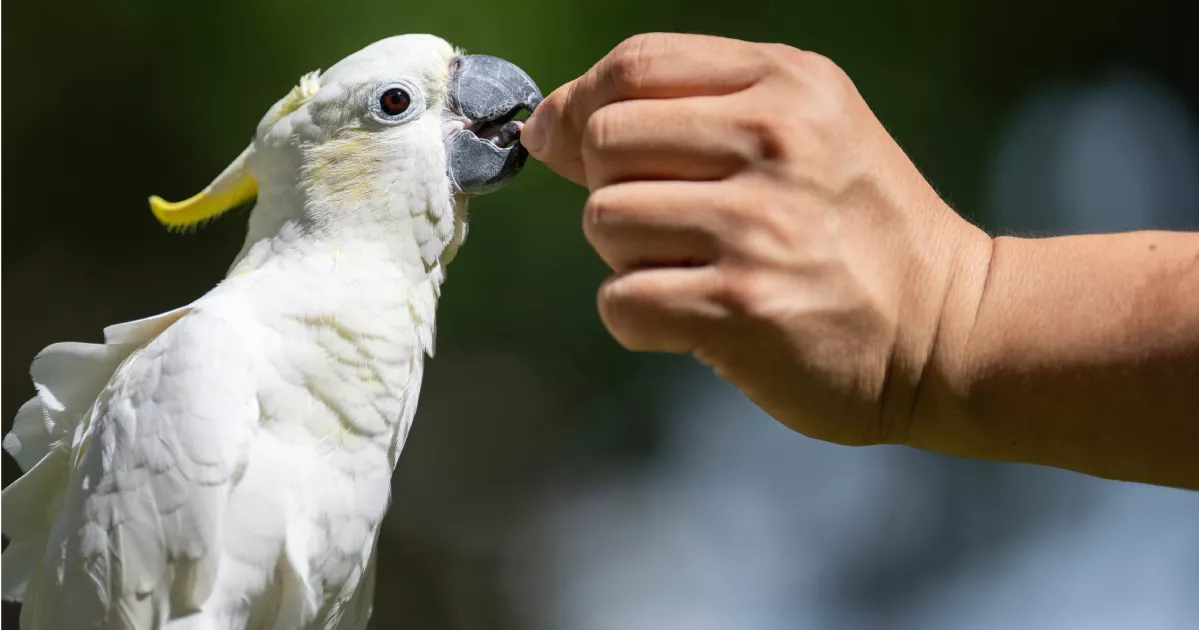
Critically endangered yellow-crested cockatoos found an unexpected sanctuary among Hong Kong ’s towering skyscrapers, but like their human neighbors they now face trouble finding a place to call home.
Native to Indonesia and East Timor, the snow-white birds, their crests flashing like yellow crowns, squawk through the urban parks of the Asian financial hub. They make up roughly 10% of the species’ global wild population, which numbers only up to 2,000 mature birds.
Research shows the city’s cockatoo population has stagnated as the birds, which live in tree cavities, are losing natural nesting spaces in old trees due to typhoons and government tree trimming for public safety. That’s adding to global pressures on cockatoos such as the illegal pet trade and climate change.
Hong Kong’s conservationists have stepped in with a solution: installing artificial nest boxes that mimic these natural hollows.
Astrid Andersson, a postdoctoral researcher at the University of Hong Kong who led the project, said a pair of birds already settled in a nest box her team fixed onto a tree on her campus, the city’s oldest university. She aims to install 10 boxes by year’s end and ultimately boost that figure to 50 in the next few years across Hong Kong Island.
“And then they can continue to live in the city,” she said.
Pet trade and habitat loss push species in Indonesia to the brink
Once widespread across island chains from central to eastern Indonesia and East Timor, the yellow-crested cockatoo has vanished from many islands and clings to survival on others.The International Union for Conservation of Nature says as much as 90% of the population is thought to have disappeared since 1978, mainly due to trapping for the pet trade.
Weak enforcement of a 1994 export ban by Indonesia has allowed the trade to persist, including targeting chicks. In 2015, Indonesian police arrested a man on suspicion of smuggling about 20 birds by stuffing them inside water bottles.
Deforestation from farming and logging is another problem. Indonesia lost 107,000 square kilometers (41,300 square miles) of its original tropical rainforest between 2002 and 2024 — an area about the size of Iceland — accounting for about a third of all tree cover loss during that time, according to Global Forest Watch.
Climate change is making things worse. Rising temperatures dry out forests, leaving them more vulnerable to fires. Many birds live on volcanic islands, where eruptions can spark wildfires in the parched landscapes.“The fires are humongous,” said Bonnie Zimmermann, director of the Indonesian Parrot Project, a nonprofit organization.
The wild cockatoos in Hong Kong’s urban parks could be from escaped or released pets, Andersson said. One urban legend says they descended from pet birds released by a British governor before he surrendered to invading Japanese troops in 1941. Hong Kong, a former British colony, returned to Chinese control in 1997.